
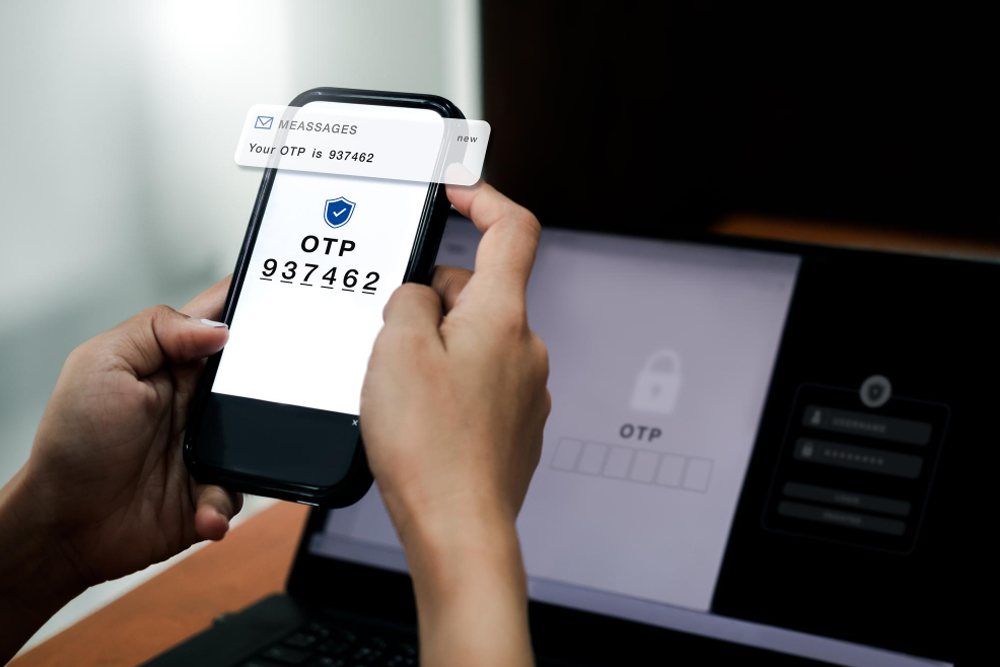

Every day, millions of people log in to banking apps, confirm online purchases, and recover forgotten passwords using a simple text message containing a one-time password. That short numeric code represents one of the most widely used authentication mechanisms on the internet today.
SMS OTP verification bridges two worlds: digital platforms and telecom networks. It connects software systems, messaging gateways, mobile carriers, and physical devices in a chain that must work flawlessly within seconds. When it does, users hardly notice. When it fails, login attempts stall, payments halt, and support teams face a surge of complaints.
At Global Telecom Testing, our OTP testing services help businesses monitor how authentication messages perform across carriers, countries, and real devices.
What Does SMS OTP Verification Do?
SMS OTP verification adds a second authentication layer to confirm user identity. Instead of relying only on a password, the system sends a temporary code to a registered mobile number.
The OTP typically consists of four to eight digits and remains valid for a short time window. Entering the correct code proves that the user has physical access to the phone associated with the account.
This process is widely used for actions such as:
- Logging in to online accounts
- Verifying new user registrations
- Confirming financial transactions
- Resetting forgotten passwords
- Activating two-factor authentication
The concept is simple. Yet the infrastructure behind it involves multiple technical components working together across telecom networks.
The Hidden Infrastructure Behind an OTP Message
When a user requests a verification code, the application server generates a random numeric value using a secure algorithm. That code is stored temporarily in the authentication system.
The message then travels through several systems before reaching the user’s phone.
First, the application sends the code to an SMS gateway or communications platform through an API request. The gateway converts the message into a format compatible with telecom signaling protocols.
From there, the message enters the telecom ecosystem. It may pass through several carrier networks before arriving at the destination operator serving the user’s phone number.
Each stage introduces potential latency:
- Application processing time
- Messaging gateway routing
- Carrier-to-carrier handoffs
- Mobile network delivery
If everything works smoothly, the message appears on the device within seconds. If not, delays or failures may occur. This multi-layer infrastructure explains why OTP reliability depends heavily on telecom routing quality.
Why SMS OTP Became the Default Authentication Method
Despite the rise of authentication apps and biometric security, SMS OTP continues to dominate many authentication systems.
The primary reason is reach. Almost every mobile phone in the world can receive text messages. Users do not need to install an app, configure additional software, or purchase specialized hardware.
SMS also works across:
- Smartphones and basic mobile phones
- Different operating systems
- International networks
From a user experience perspective, SMS verification introduces minimal friction. Most people already understand how to read a text message and enter a numeric code.
For businesses operating across global markets, this universality makes SMS OTP a practical authentication option.
The Security Strength of SMS OTP
SMS verification protects accounts from password-only attacks. If an attacker obtains login credentials but cannot access the user’s phone, the second factor blocks unauthorized entry.
The system also reduces damage from password reuse across multiple websites. Even if credentials appear in a data breach, the attacker still needs access to the registered phone number.
Additional safeguards commonly used with OTP systems include:
- Time-limited code expiration
- Automatic invalidation after use
- Attempt limits to prevent brute-force guessing
These protections make SMS OTP far stronger than single-password authentication. However, SMS verification is not immune to security threats.
Known Security Risks in SMS Authentication
Because SMS was originally designed for simple text communication rather than secure authentication, several vulnerabilities exist.
One of the most widely discussed threats is SIM swap fraud. In this attack, criminals convince a mobile carrier to transfer a victim’s phone number to a new SIM card controlled by the attacker. Once the number moves, authentication messages arrive on the attacker’s device.
Another risk involves phishing or smishing attacks. Fraudulent messages trick users into revealing OTP codes on fake websites or during phone calls. Interception risks also exist in certain telecom signaling systems, although they are less common.
These weaknesses do not eliminate the value of SMS authentication. Instead, they highlight the need for layered security strategies and strong monitoring.
Why OTP Delivery Fails More Often Than People Expect
Even without security threats, SMS OTP delivery can fail for operational reasons. Telecom networks are not uniform worldwide. Each country has different carrier infrastructures, routing agreements, and filtering rules.
Common delivery challenges include:
- Carrier spam filters blocking automated traffic
- Delayed routing between international networks
- Network congestion during peak traffic periods
- Sender ID restrictions in certain regions
A message that delivers instantly in one country may take several seconds in another. In extreme cases, it may not arrive at all. For businesses relying on authentication codes, these inconsistencies can directly affect customer experience.
How Businesses Test SMS OTP Systems
To maintain reliable authentication flows, organizations must test OTP delivery across real telecom networks. Simulated lab testing cannot fully replicate carrier behavior.
Testing typically involves sending OTP messages to real devices connected to live mobile networks. This approach confirms that codes arrive correctly and display properly on user devices.
Effective testing programs measure several factors:
- Delivery success rate
- Time between message send and receipt
- Code formatting across devices
- Sender ID visibility
Testing across multiple carriers within a country reveals operator-level differences in message filtering or routing. Continuous monitoring also helps identify changes in network behavior before they affect customers.
Improving Global OTP Reliability
Organizations operating internationally often adopt several strategies to improve authentication reliability.
First, direct carrier connections reduce the number of routing intermediaries. Fewer network hops typically result in faster delivery and lower failure rates. Second, traffic distribution across multiple routes provides redundancy. If one path becomes congested or blocked, another route can still deliver the message.
Third, device testing across multiple operating systems and handset models verifies that OTP codes appear clearly on the screen. Finally, ongoing performance analytics allow teams to detect regional delivery issues and adjust messaging routes accordingly.
Test OTP Performance Across Carriers and Countries
At Global Telecom Testing (GTT), our OTP testing services help businesses evaluate how authentication codes perform across real telecom environments worldwide. We conduct testing across more than 75 automated markets and over 200 live markets, using local networks to validate both message delivery and the end-user experience.
Our teams run real-world tests that review code generation, formatting, expiration timing, and regional delivery behavior. We also assess rate-limiting controls and simulate common attack scenarios to identify potential security gaps.
With flexible pay-as-you-go or monthly billing options, companies can test authentication performance without long-term commitments. Contact our team today to schedule a free trial test and see how your OTP system performs across global networks.